

“To be seen is to be truly known.”
-Tara Branch
What’s Important to Me
Attunement
I strongly believe in the power of attunement. To me, attunement is connection, to be with. It’s fostering a deep relationship that’s built on trust, safety, and comfort. One of my biggest goals when working with clients is to connect and to just be. So often we are left without connection, and it leaves an intense longing within us. My hope is to bridge that gap so the people who I’m walking alongside in their mental health journey know they have a safe place to land.
Authenticity
Society has become so focused on material goods, wealth, portraying the perfect image of life, that we lose sight of our humanness. Authenticity pushes back against that. In my office, the clients I serve are encouraged to be who they are. To allow themselves to take off the masks and show up in their beautifully authentic selves.
Masking is exhausting. You don’t have to do that with me.
Relational
Humor. Silliness. Playfulness. Directness. Joy. Warmth. Compassionate. These are all the traits that are important to me in building a relationship with a client. Studies show that the biggest predictor of client progress is the therapeutic relationship. Above all, regardless of the modalities, the therapeutic connection takes precedent. When clients are sitting in front of me, they are getting the real me. And in turn, I hope to see the real them. This is where healing lies.
Meet Anna
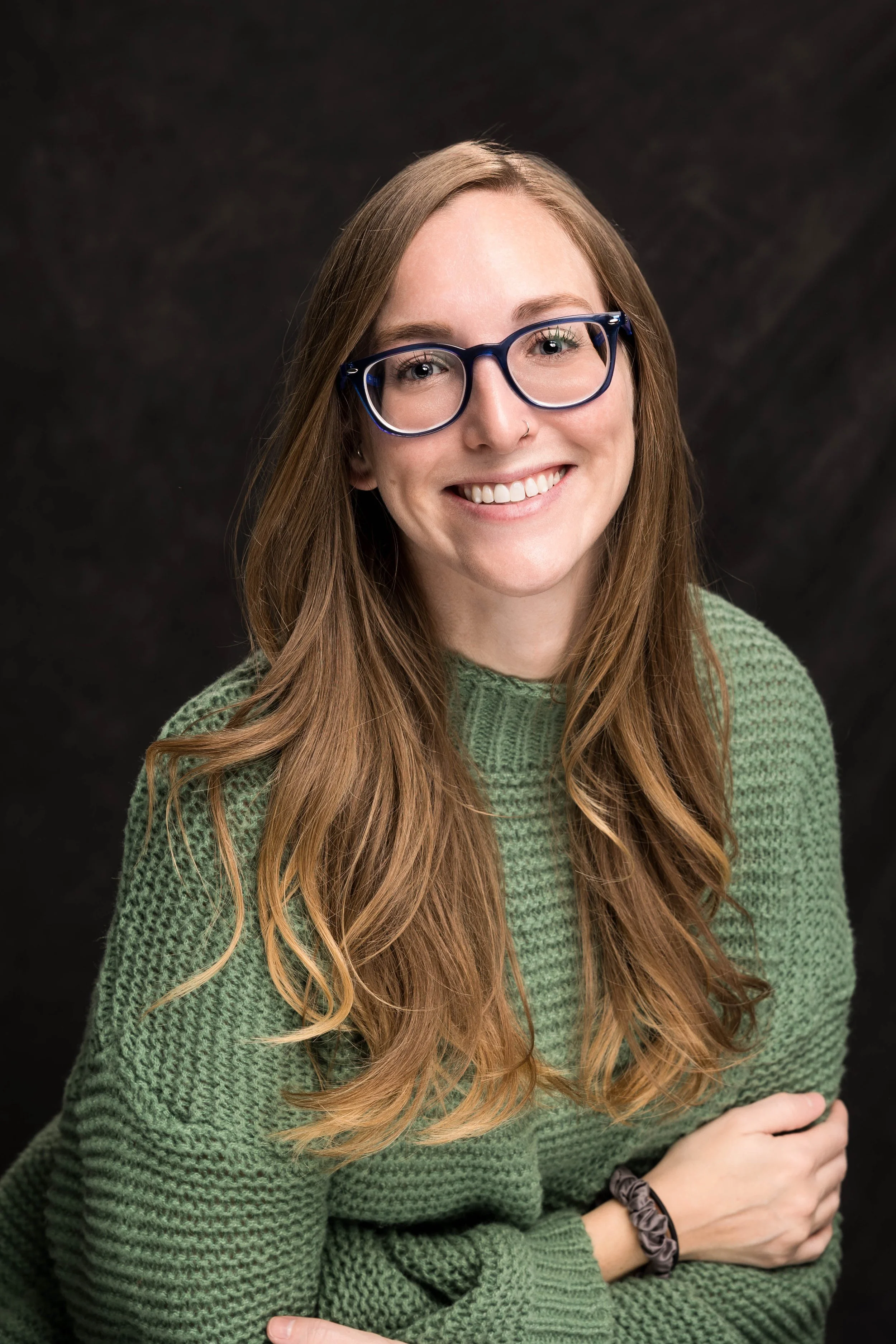
You deserve a therapist who gets it. Who understands the therapy process and understands the intensity of the work. Someone who understands what it’s like living with neurodivergency in a neurotypical world. A therapist who understands the exhaustion of living with mental illness and still having to show up every day.
Oftentimes, when we seek out therapy, we want to make sure our therapist understands. It’s one thing to seek someone who has training and expertise, and it’s another to seek someone who has those plus lived experience. Some identities in which I hold are:
AuDHD – late diagnosed, high-masking
LGBTQ – queer, genderqueer (This is a “newer” identity in that I’ve recently come into my own queerness. I don’t align with being 100% woman or 100% straight (while also being in a hetero passing marriage))
Recovery from CPTSD, perfectionism, depression, and anxiety
I understand what it’s like to be in the client role. Over the last 15 years, including currently, I’ve been to a handful of therapists for different support and treatment- to address my own bouts of depression, anxiety, and trauma. I deeply value the importance of doing my own work in order for me to show up as healthily and present as I can for the clients I serve.
I strive to create a space where people can be who they are, freely and authentically. I aim to create a space where you can address the hurt, rewire the narratives that you’ve been telling yourself for years, improve your relationships, and build the authentic life you deserve. One in which you’re able to be self-compassionate, learn how trust yourself and others, and feel whole.
My approach encompasses the values of attunement and authenticity and upholds the importance of the therapeutic relationship. The theories that inform my practice are: feminist, psychodynamic, person-in-environment, humanistic, and attachment.
I recognize the privilege I hold in being a white, thin, female-passing, straight-passing, and able-bodied passing individual. I’m committed to providing an inclusive, anti-racist, anti-ableist, and anti-oppressive space that values and honors the intersectionality of different demographics. I feel passionate about social justice issues and advocacy. I strive to continue to learn about the ways society oppresses marginalized individuals and do my best to listen to and uplift marginalized voices.
Qualifications
-
I received my Bachelor of Arts in Applied Psychology in 2014 and went on to receive my Master of Social Work in 2016.
Upon graduating with my MSW I worked in the WISe (Wraparound with Intensive Services) program serving at-risk youth and families at a community mental health agency for about 2.5 years. I then transitioned to an outpatient position at the same agency working with ages 5-60 providing individual therapy services. I did that for about 2.5 years before moving onto a different CMH agency where I continued to provide individual therapy in an outpatient setting for an additional three years.
I opened my practice, Changing Tides Counseling, at the beginning of 2025 and fully transitioned out of agency work at the end of March 2025.
In sum, I’ve been practicing therapy for 10 years.
-
Master of Social Work, Eastern Washington University, 2016
Washington State Licensed Clinical Social Worker, 2020: LW61062695
-
EMDRIA Certified Therapist™
Internal Family Systems, Level 1 Trained
Eye Movement Desensitization & Reprocessing Basic Training
Common Elements Treatment Approach (CETA)
Trauma-Focused Cognitive Behavior Therapy
CBT for Psychosis
Circle of Security
When There Are No Words (Preverbal Trauma)
EMDR with Complex Trauma with Thomas Zimmerman
EMDR Refresher Courses with Thomas Zimmerman
Mastering EMDR Intensives with Kendhal Hart
Thomas Zimmerman’s Four Blinks
Flash Technique with Phil Manfield
Introduction to Neurodivergence: Adapting Therapy Techniques to Support and Empower Adults with ADHD and Autism with Laura Tewel
Currently going through Autistic Centered Therapy with Kate McNulty & Matt Lowry
Dialectical Behavior Therapy
Clinical Supervision: Principles & Methods
DeTUR: Urge Reduction for Addictions & Dysfunctional Behaviors
-
I use a variety of therapy methods, modalities, and techniques of which are tailored to each individual. These may include but are not limited to:
EMDR
Internal Family Systems
Attachment-Focused EMDR, informed
Ego State
Somatics, informed
CBT
Acceptance and Commitment Therapy, informed
Dialectical Behavior Therapy, informed

Are we a good fit?
We may be a good fit if:
You’re an adult; Autistic or ADHD, including late-diagnosis or self-IDing; queer/LGBTQIA+
You’re open to a therapist who utilizes self-disclosure (within reason), humor, and swearing
You are ready, motivated, and wanting to do the work
You want to be intentional with your time and are focused on recovery
You are oriented toward relational therapy and are open to a balance of building skills but also going deep
You enjoy working collaboratively and interactively
You may want to consider another therapist if:
You are seeking support for an area I don’t specialize in (i.e. eating disorders, bipolar, etc.)
You want me to lead the sessions, every session
You are wanting a structured, time-bound, skills-building approach such as CBT or DBT
You want to keep things on the surface and use the time solely as a sounding board